How to Get Rid of Head Lice: Wet Combing, Treatments and Nits
Compiled and fact-checked from cited sources, reviewed by our editorial team.
Head lice usually arrive as a message from school, and the first reaction is almost always the same: panic and embarrassment. Neither is warranted. Lice are just as happy in freshly washed hair, and they have nothing to do with hygiene. The bad news is more practical: killing the lice is easy, clearing the nits is not. The thing that decides whether you win is not the product you buy — it is repeating the right method on the right days.
This guide covers exactly that: the wet combing method that works without chemicals, what pharmacy treatments actually do, which home remedies are worth your time, and the 17-day schedule that ends the infestation for good.
This article is general information and does not replace medical advice. Ask your pharmacist or doctor about product choice, age limits and application times — especially for children under two, and during pregnancy or breastfeeding.
What a head louse actually is
A head louse is a wingless insect the size of a sesame seed, 2–3 mm long. It cannot jump and cannot fly — it only crawls. That is why transmission is almost always head-to-head contact; children leaning together over a phone is the classic route.15
Knowing the life cycle explains why a single treatment never finishes the job:
| Stage | Duration | Why it matters |
|---|---|---|
| Egg (nit) | Hatches in 7–10 days | Glued to the hair shaft; most products cannot get inside |
| Nymph | Matures in 9–12 days | Newly hatched lice must be caught in this window |
| Adult louse | Lives up to 30 days on a head | Lays 6–10 eggs a day |
| Louse off the head | Dies within 1–2 days | Catching lice from furniture is very unlikely |
The number to remember is 7–10 days. The first treatment kills the live lice, but some eggs survive; if you do not strike again before they hatch, the cycle restarts. That is the entire reason products tell you to repeat.2
Itching is not proof of infestation. The itch is an allergic reaction to louse saliva and can take 4–6 weeks to develop the first time someone gets lice. So no itching does not mean no lice — and itching for a week after successful treatment does not mean it failed.
First, make sure it really is lice
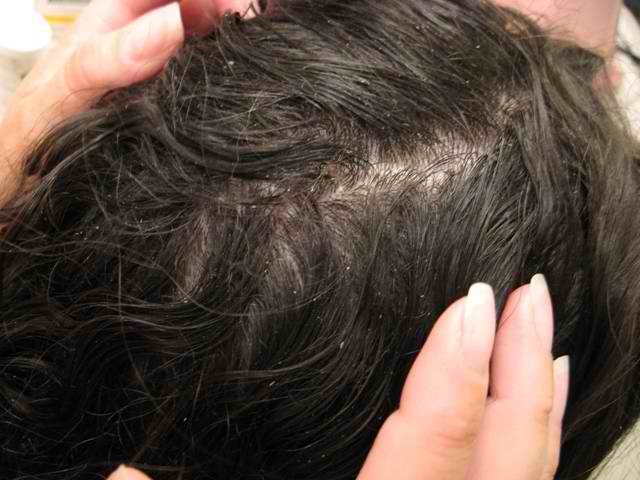
Dandruff, dried hairspray and flakes of scalp are constantly mistaken for nits. The test is simple: dandruff falls off when you shake it, a nit does not. Nits are cemented to the hair shaft and have to be slid off with a fingernail.3
A confirmed diagnosis means seeing a live louse.1 For the full method — where to look, and how to tell a live nit from an empty shell — see our guide to checking for head lice and nits. Combing wet hair with a fine-toothed detection comb is far more reliable than looking with the naked eye. Check close to the scalp, especially behind the ears and at the nape of the neck. Nits within about 6 mm of the scalp are recent; further out they are usually empty shells.
Four approaches, one logic
- How it worksImmobilises lice, removes them physically
- Who forAny age, no chemicals
- How it worksCoats and suffocates the louse — no resistance
- Who forPeople avoiding insecticides; resistant cases
- How it worksAttacks the louse's nervous system
- Who forHeavy infestations; mind the age limits
- How it worksThe product takes the lice, the comb takes the nits
- Who forHighest success rate
What all four share: none of them finishes the job in one go. Success is decided by the discipline of repeating, not by the method you pick.
The most effective home method: wet combing with conditioner
Conditioner does not kill lice. It stops them gripping the hair, slows them down and lets the comb glide. Because there is no medication involved, it works at any age, and the UK’s National Health Service recommends it as the first option.1
- Wash the hair with ordinary shampoo and rinse.
- Apply plenty of conditioner — do not rinse it out; it stays in for the whole session.
- Detangle with a normal comb.
- Comb with a fine-toothed detection comb, from the roots to the ends. Work in small sections and finish each one before moving on.
- Wipe the comb after every stroke onto a white tissue or paper towel — that is the only way to see what is coming out.
- Comb the whole head twice, then rinse.
It takes about 10 minutes for short hair and 20–30 minutes for long, curly or thick hair.1
The schedule matters as much as the technique: repeat the wet combing on days 1, 5, 9 and 13, then do a final check on day 17. Those intervals are timed to catch newly hatched lice before they are old enough to lay eggs.1 Finish the schedule even if you stop seeing lice — stopping early is the number one cause of a "recurring" infestation.
The comb itself decides a lot. Metal-toothed lice combs with a 0.2–0.3 mm gap work noticeably better than the plastic ones sold in supermarkets; plastic teeth splay apart and slide over the nits.
Pharmacy treatments
If wet combing is not working, or the infestation is heavy, medicated products are the next step.
| Type | How it works | What to know |
|---|---|---|
| Dimeticone (silicone oil) | Physically coats and suffocates the louse | Lice cannot develop resistance to it; usually considered the safer option in pregnancy, breastfeeding and young children. Applied to dry hair — wet hair dilutes it |
| Permethrin / pyrethrins | Insecticide acting on the louse’s nervous system | Cheap and widely sold, but resistance is now widespread in many countries; the NHS no longer recommends permethrin products.1 The CDC still lists permethrin 1% as an over-the-counter option, with a second dose on day 92 |
| Malathion | Strong, in some countries prescription-only | Flammable — keep away from hairdryers, cigarettes and open flames |
| Prescription options | Ivermectin lotion, spinosad, benzyl alcohol | For resistant cases; some kill eggs too, so no second dose or combing is needed2 |
Rules that decide whether it works:
- Follow the contact time on the bottle exactly. Leaving it on longer does not help; it irritates the scalp.
- Get the product onto the scalp, especially behind the ears and at the nape.
- Do not skip the second application after 7–10 days.2 Assuming one dose finished it is the commonest reason treatment fails.
- Keep combing after treatment. Dead lice and nits stay in the hair; the comb is what removes them.
- If a product fails twice, the problem is usually the wrong product or resistance, not the dose. Ask a pharmacist rather than repeating it a third time.
Never use these products preventively. Treating a child who does not have lice irritates the scalp and helps resistance spread; the NHS advises against it explicitly.1
Getting the nits out
No shampoo, lotion or rinse detaches a nit. They come out mechanically: wet hair, plenty of conditioner, a metal fine-toothed comb, root to tip, section by section. Some people loosen the glue first with a vinegar rinse (one part vinegar to one part water, left a few minutes). The evidence for it is weak, but it does no harm and may make combing easier.
Empty shells further than about 6 mm from the scalp are cosmetic, not infectious. If a school insists on a “no nit” rule, that is worth pushing back on — the American Academy of Pediatrics considers such policies unnecessary and recommends dropping them.4
🛑 Kerosene, petrol and pet products: never
The most-discussed folk remedy is also the most dangerous. Kerosene does kill lice — at a price no one should pay.
Never put kerosene or petrol on hair. They cause chemical burns and lasting scalp damage, are toxic when inhaled, and are extremely flammable: cases of children suffering severe burns after treated hair came near a stove, heater or hairdryer are documented in the medical literature. They also fail to kill the eggs, so they do not even solve the problem. The same applies to petrol, paint thinner, flea treatments made for pets and garden insecticides — none of them belong on a human head.
Products made for animals are a separate hazard: the doses and carriers are not formulated for human skin. Head lice live only on humans, so you cannot catch them from a cat, dog or bird — there is no logic to reaching for a pet product in the first place.
Home remedies: which ones actually work?
| Remedy | What it really does | Verdict |
|---|---|---|
| Conditioner + combing | Slows lice, removes them physically | ✅ Evidence-based, first choice |
| Olive or coconut oil overnight | May suffocate some lice; limited effect on eggs | ⚠️ Can help, not enough alone |
| Mayonnaise | Same suffocation idea, much messier | ⚠️ Weak evidence |
| Vinegar rinse | May loosen the glue holding nits | ⚠️ Does not kill; a combing aid at best |
| Tea tree oil | Kills lice in the lab; unreliable in practice | ⚠️ NHS does not recommend it; can cause skin reactions |
| Alcohol / cologne | Dries and irritates the scalp, flammable | ❌ Don’t |
| Hair straightener or hot dryer | Burn risk, cannot reach nits at the scalp | ❌ Don’t |
| Shaving the head | Reduces lice but is a heavy price for a child | ❌ Unnecessary — combing does the same job |
| Electric lice comb | Works on dry hair, less reliable than wet combing | ⚠️ NHS does not recommend it |
The shared weakness of every home remedy is the same: none of them reliably kills eggs. Whichever you choose, the comb stays in your hand.
What to do around the house — and what to skip
The urge to disinfect the whole house is understandable and mostly unnecessary. A louse that falls off a head dies within 1–2 days, and eggs cannot hatch away from body heat.2
Worth doing:
- Wash bedding, towels and clothes used in the last two days at 60 °C, or tumble-dry on high for 15 minutes.
- Soak combs and brushes in hot soapy water (around 60 °C) for 5–10 minutes.
- Seal items that cannot be washed — pillows, soft toys — in a bag for two weeks.
- Vacuum the beds and sofa once. That is enough.
Not worth doing: spraying the house with insecticide (ineffective and harmful), steam-cleaning carpets, washing every curtain, disinfecting toys one by one. Lice do not establish themselves anywhere but a human head.
Check everyone in the household — but treat only those who need it. Comb every family member's hair; treat only the ones with live lice. Everyone who is infested should be treated on the same day, otherwise the household passes it back and forth for weeks.
Six mistakes that keep lice coming back
- Assuming one application finished it. Eggs hatch over 7–10 days; without the second dose and continued combing it is not over.
- Skipping the comb. No product removes nits from hair — only a comb does.
- Checking dry hair and declaring it clear. Lice avoid light and move fast; without wet combing they are easy to miss.
- Leaving a product on longer or using more of it. It does not improve results, it irritates skin.
- Treating only the child. If the household is not checked, the source stays open.
- Hiding it out of embarrassment. Not telling the school and close contacts is the main reason outbreaks drag on for weeks.
When to see a doctor
- Live lice persist after two correctly applied products (possible resistance).
- The scalp has sores, crusting, weeping or yellow scabs — scratching may have caused a bacterial infection.
- Lymph nodes at the neck or behind the ears are swollen.
- The child is under two years old.
- You are pregnant or breastfeeding.
In these situations do not choose a product yourself; a doctor may move to a prescription option.
Preventing the next round
There is no reliable way to prevent head lice — the realistic goal is catching them early. A short weekly conditioner-and-comb check during term time finds an infestation in its first days. Tying long hair back at school, discouraging the sharing of combs, hats and hair ties, and checking promptly when the school sends a notice all help.
On school attendance the NHS is clear: once treatment has started, there is no need to keep a child home.1
The 17-day plan
| Day | What to do |
|---|---|
| Day 1 | Check + wet comb (or apply treatment) + wash bedding at 60 °C |
| Days 2–4 | Quick daily check; comb if you see live lice |
| Day 5 | Second wet combing |
| Days 8–10 | Second application if you used a product |
| Day 9 | Third wet combing |
| Day 13 | Fourth wet combing |
| Day 17 | Final check — no live lice means you are clear |
Writing this on the fridge removes the “is it actually gone?” uncertainty that makes people restart treatment unnecessarily.
Frequently asked questions
What is the fastest way to get rid of head lice? The quickest route is a pharmacy treatment applied exactly as directed, followed immediately by wet combing. But “gone in one day” is not realistic: because eggs hatch over 7–10 days, you still need the second application and the combing schedule through to day 17.
Does conditioner really get rid of lice? Yes. Conditioner does not kill lice, but it immobilises them enough to be combed out. Done properly on days 1, 5, 9 and 13, wet combing can clear an infestation without any medication. Its success depends entirely on how thoroughly you comb.
Does vinegar kill head lice? No. Vinegar does not kill lice. It may slightly loosen the cement that holds nits to the hair, but the evidence is weak. Use it as a combing aid if you like, never as the treatment.
Does kerosene get rid of lice? It can kill lice, but it must never be used. Kerosene causes chemical burns and poisoning, is extremely flammable, and does not kill the eggs. The same goes for petrol, thinners and flea products made for pets.
How do you remove nits from hair? Only mechanically: on wet hair coated with conditioner, using a metal fine-toothed lice comb from the roots to the ends. No shampoo or lotion detaches a nit from the hair shaft.
How long does it take to get rid of head lice? Live lice disappear within the first days of correct treatment, but because of the egg cycle the whole process takes 2–3 weeks. If there are no live lice on day 17, the infestation is over.
Are head lice caused by poor hygiene? No. Head lice have nothing to do with how clean the hair is and are often found in freshly washed hair. They spread by head-to-head contact.
Can you catch head lice from pets? No. Head lice live only on humans. Cats, dogs and birds do not carry or transmit them, and flea products made for animals must never be used on a person’s hair.
Should my child stay off school? No. Once treatment has started there is no need to keep a child home. Telling the school and close contacts is far more useful than isolation, because it stops the outbreak spreading.
Do I need to cut my child’s hair? No. Shorter hair makes combing easier but does not solve the problem on its own — nits stay on whatever hair is left. There is no medical reason to put a child through a haircut they do not want.
Do adults get head lice too? Yes. Head lice are most common in children aged 3–11, but parents and carers in close contact with them catch them regularly. The treatment is the same for adults.
Sources
- NHS — Head lice and nits. https://www.nhs.uk/conditions/head-lice-and-nits/
- CDC — Treatment of Head Lice. https://www.cdc.gov/lice/treatment/index.html
- Mayo Clinic — Head lice: Diagnosis & treatment. https://www.mayoclinic.org/diseases-conditions/head-lice/diagnosis-treatment/drc-20356186
- American Academy of Pediatrics — Head Lice (Clinical Report), Pediatrics. https://publications.aap.org/pediatrics/article/150/4/e2022059282/189566/Head-Lice
- Cleveland Clinic — Head Lice: What They Are and How To Get Rid of Them. https://my.clevelandclinic.org/health/diseases/10824-head-lice